Places every 11 November
On 11 November, Poznań eats about 250 tonnes of St Martin's croissants
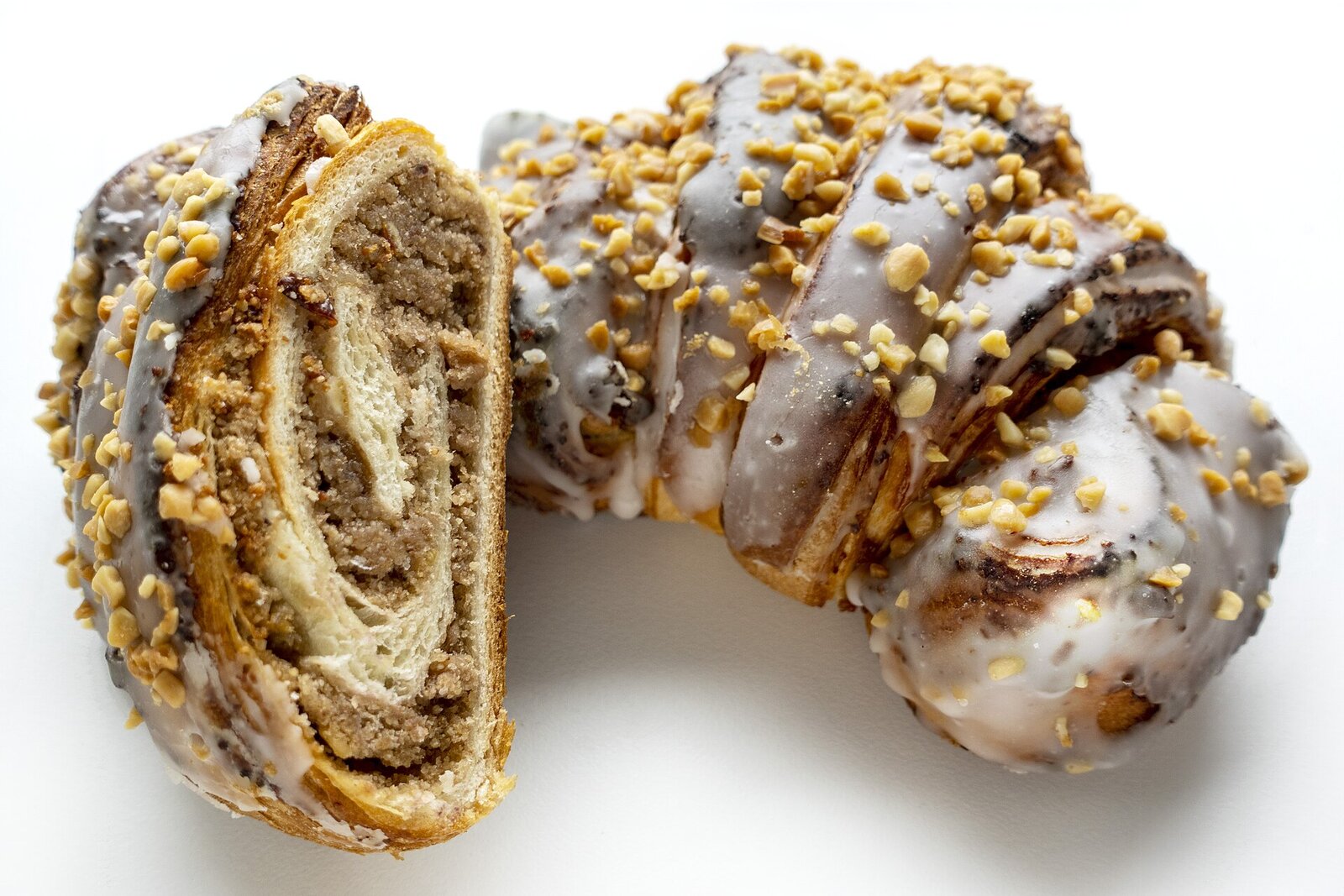
Saint Martin’s Day falls on 11 November, and in Poznań, a city in western Poland, that means rogal świętomarciński, St Martin’s croissant: a heavy, horseshoe-shaped pastry filled with white poppy seed, nuts, raisins and candied fruit, iced and sprinkled with chopped nuts. The horseshoe is said to be the one St Martin’s horse lost.
Poznań had been baking them for 11 November since at least 1860, when the oldest known advertisement appeared. The popular story of how the custom took its present form comes from 1891: the priest of St Martin’s parish asked his congregation to do something for the poor, as their patron saint had. A confectioner in the church talked his employer into baking the old croissants again; the better-off bought them, and the poor got them free.
Today the name is protected under EU law (since 2008), and only bakeries certified by a local chapter, about a hundred of them, may use it. When Poznań applied for that protection in 2006, its bakers’ guild reported selling about 250 tonnes on 11 November alone. A parade led by St Martin on horseback goes down the street named after him, Święty Marcin, and it is also Poland’s Independence Day.
Elsewhere in Europe St Martin’s Day brings roast goose, and in German and Dutch towns children walk with lanterns.
Sources
- Rogal świętomarciński, Polish Wikipedia — in Polish; the 1891 story, the certificate, the EU protection
- Application to register 'Rogal świętomarciński' as a protected geographical indication (2006) (archived copy) — in Polish, PDF; 250 tonnes on 11 November (p. 18)
- Imieniny ulicy Święty Marcin, Polish Wikipedia — in Polish; the parade
- St. Martin's Day, Wikipedia — goose and lanterns elsewhere