History 1969
The first people on the Moon got there on Apollo 11
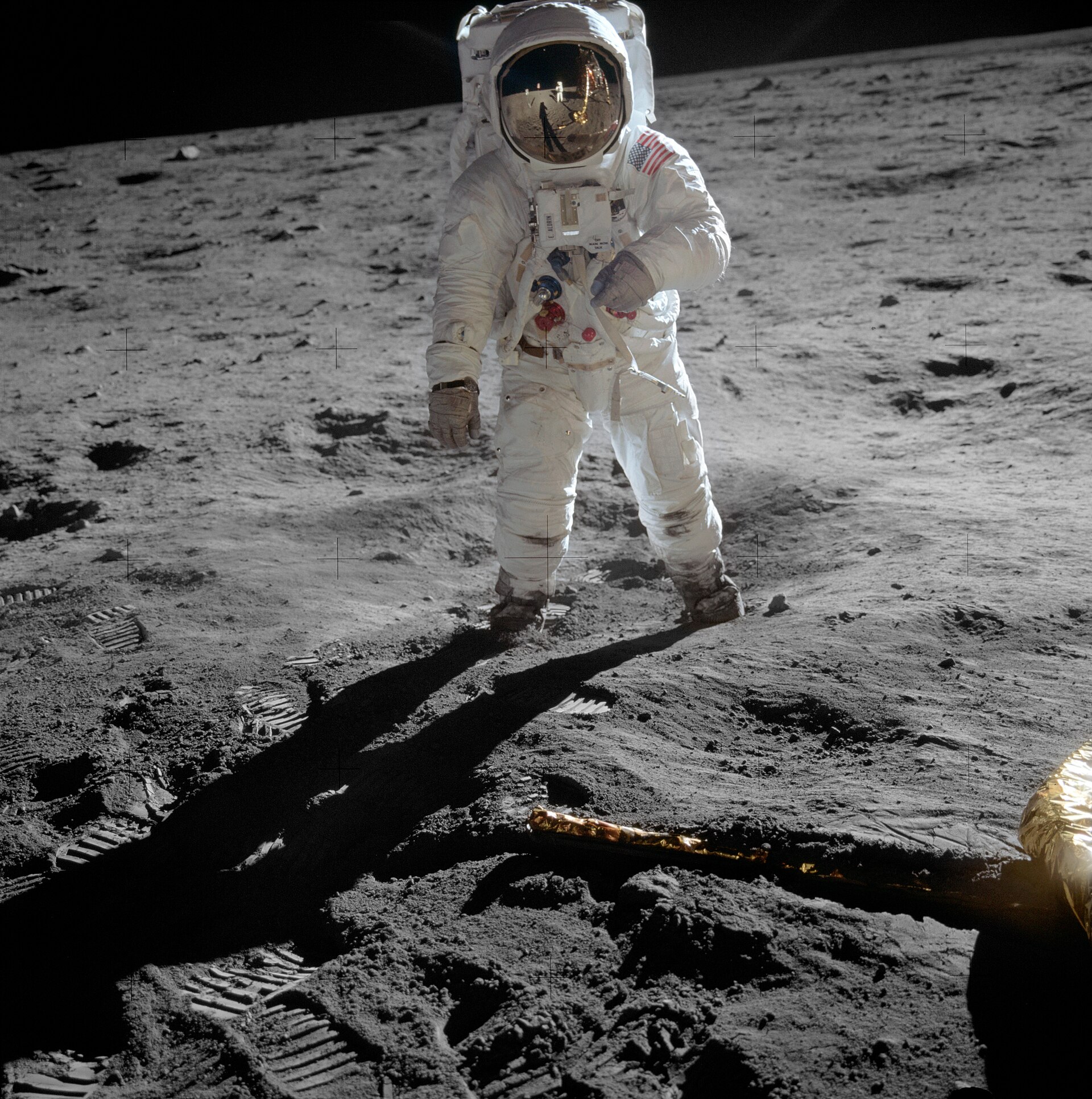
Of all the numbered missions humans have flown, only one is known to everyone on Earth. On 20 July 1969, Apollo 11 landed Neil Armstrong and Buzz Aldrin on the Moon. The most famous photograph from the surface, Aldrin with the lander and Armstrong reflected in his gold visor, was taken by a man who was, for a moment, the only other person on another world.
Nobody chose eleven for luck. The missions were numbered in order, and the first landing fell to the eleventh: two months earlier Apollo 10 had flown a full rehearsal, down to fifteen kilometres above the surface. The only numbers ever skipped were 2 and 3, after the fire that killed the Apollo 1 crew in 1967, and that had nothing to do with luck either. So eleven simply turned up, on what may be the most famous journey people have ever made. Just a coincidence, of course.
The crew did decide how to write it. On the mission patch they put “Apollo 11” rather than “Eleven”, because Armstrong worried that the word would not be understood by people who did not speak English. They left their own names off the patch, so that it would stand for everyone who had worked towards the landing.
Sources
- Apollo 11, Wikipedia — the mission patch, after Michael Collins, Carrying the Fire
- Apollo 4, Wikipedia: mission numbering