Places every year
In the Rhineland, carnival begins on 11.11 at 11:11, and eleven is carnival's own number
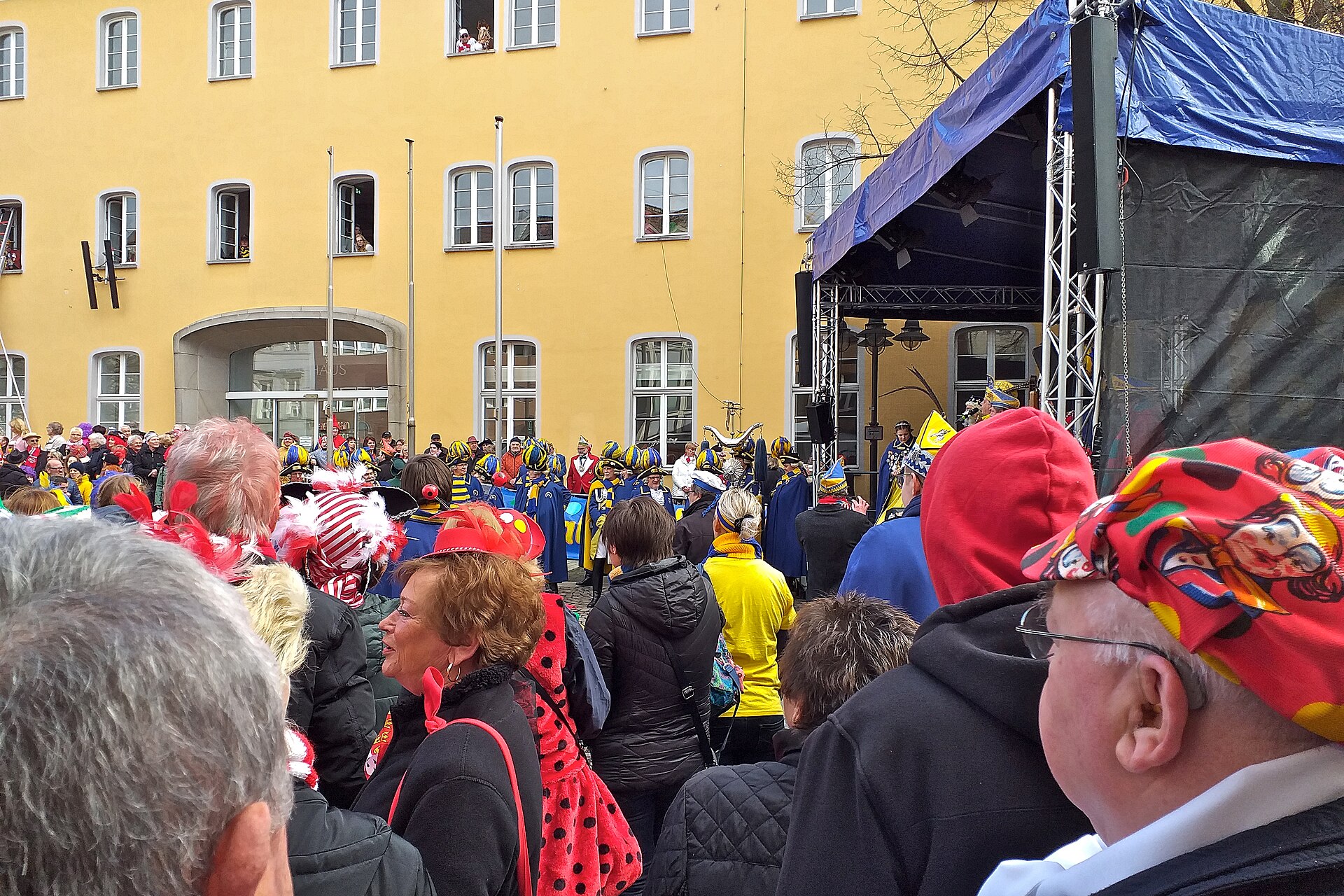
In Cologne, Düsseldorf, Mainz and the rest of the German Rhineland, the “fifth season” of the year, carnival, starts to the minute: on the eleventh of November, at eleven minutes past eleven in the morning, when the squares fill with people in costume and in Cologne the first Kölle Alaaf! (“Long live Cologne!” in the local dialect) goes up. Eleven, Elf in German, is the Narrenzahl, the number of the Narren, the jesters of carnival, and the council that presides over the carnival shows is the Elferrat, the Council of Eleven.
Why eleven? In the Middle Ages it had a bad name: one past the Ten Commandments, the number of sin and excess. When Cologne reformed its carnival in 1823, the organisers turned it around. They read eleven as “one beside one”, two identical digits standing for the equality of all jesters. A popular story also reads ELF as Égalité, Liberté, Fraternité (equality, liberty, fraternity), but the French motto actually begins with Liberté, so that one is probably a later joke.
The season peaks in its last week, on the Thursday before Ash Wednesday, when Lent, the forty days of fasting before Easter, begins. That Thursday is Weiberfastnacht, women’s carnival. The celebrations start, once again, at 11:11. In many towns women storm the town hall and take power for the day, a custom begun by the washerwomen of Beuel, near Bonn, in 1824. Since the middle of the 20th century they have also cut off men’s ties. A German court looked into this in 1988 and decided that a man who joins the carnival crowd can be assumed to have agreed.
Sources
- Elf, German Wikipedia — in German; carnival opens on 11 November at 11:11; eleven became the carnival number in the 19th century
- 'Woher kommt die Narrenzahl 11?', University of Mainz (archived copy) — in German; eleven as one past the Ten Commandments; "one beside one"; the reordered French motto
- 'Die närrische Elf', SWR carnival lexicon (archived copy) — in German; the equality of all jesters; why the ÉLF reading is unlikely
- Weiberfastnacht, German Wikipedia — in German; 11:11, the Beuel washerwomen of 1824, the ties, the Essen court ruling of 1988
- EduKredka, a Polish video about German carnival (from about 9:30) — in Polish