Math & science since 1843
The Sun has an eleven-year heartbeat
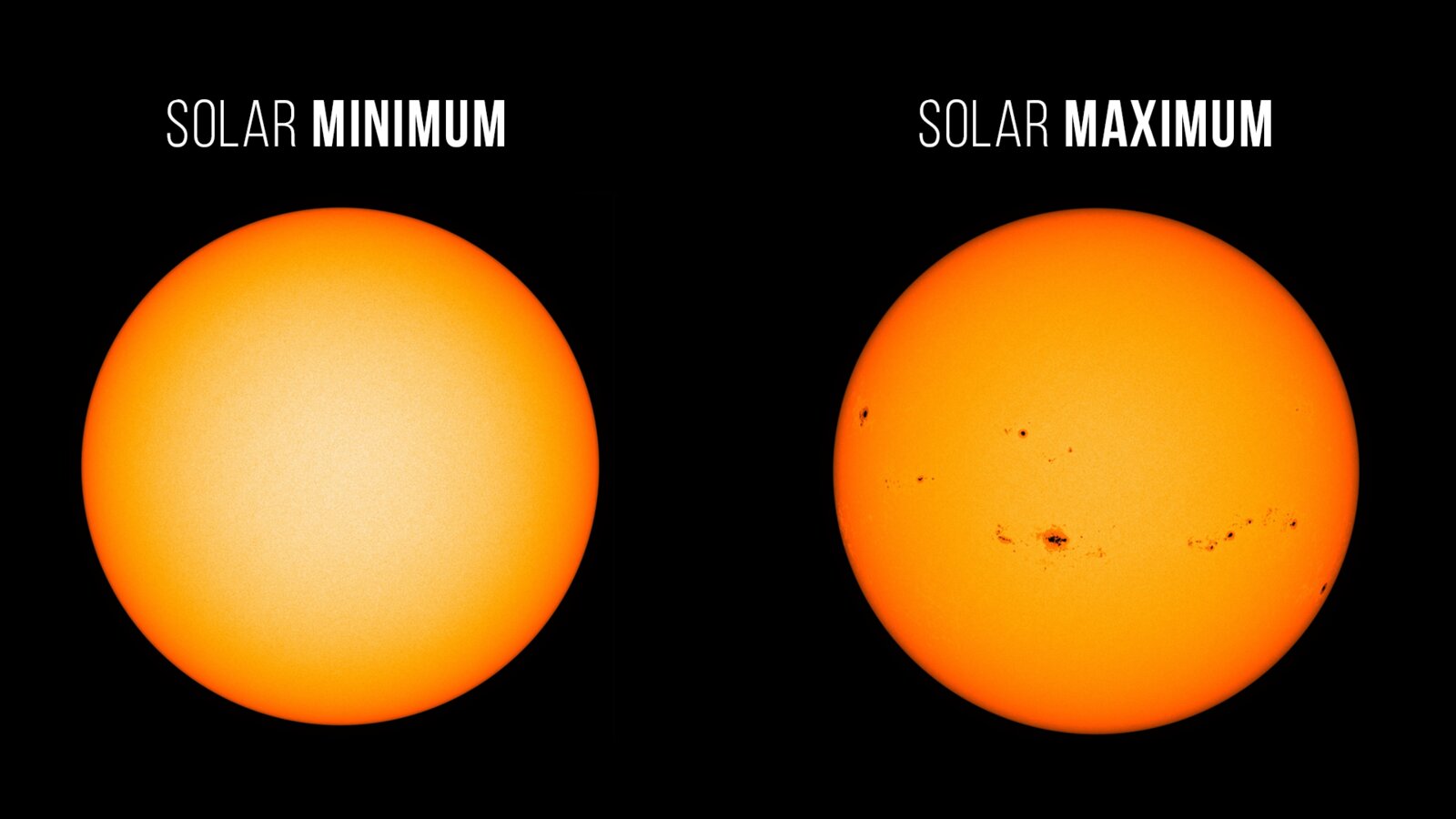
Count the dark spots on the face of the Sun over the years and they rise and fall: many, then few, then many again. One full round takes about eleven years, and astronomers call it the solar cycle.
It was found by Heinrich Schwabe, a pharmacist from Dessau in Germany, who won his first telescope in a lottery in 1825. He was hunting for Vulcan, a planet that some believed hid inside the orbit of Mercury, and hoped to catch it crossing the face of the Sun. For 17 years, on every clear day, he recorded the Sun’s spots. No planet turned up, but in 1843 he noticed that the spots came and went in a rhythm. He put it at about ten years; longer records have since settled on about eleven.
Near the peak of each cycle the Sun’s magnetic field flips, north becoming south, so the Sun needs two cycles, about 22 years, to get back to where it started.
Sources
- Solar cycle, Wikipedia — 1843, "about 10 years" in Schwabe's own words, the magnetic flip and the 22-year Hale cycle
- Heinrich Schwabe, Wikipedia — the pharmacy, the lottery telescope, the search for Vulcan