Words c. 80 AD
'The eleventh hour' comes from labourers hired almost too late
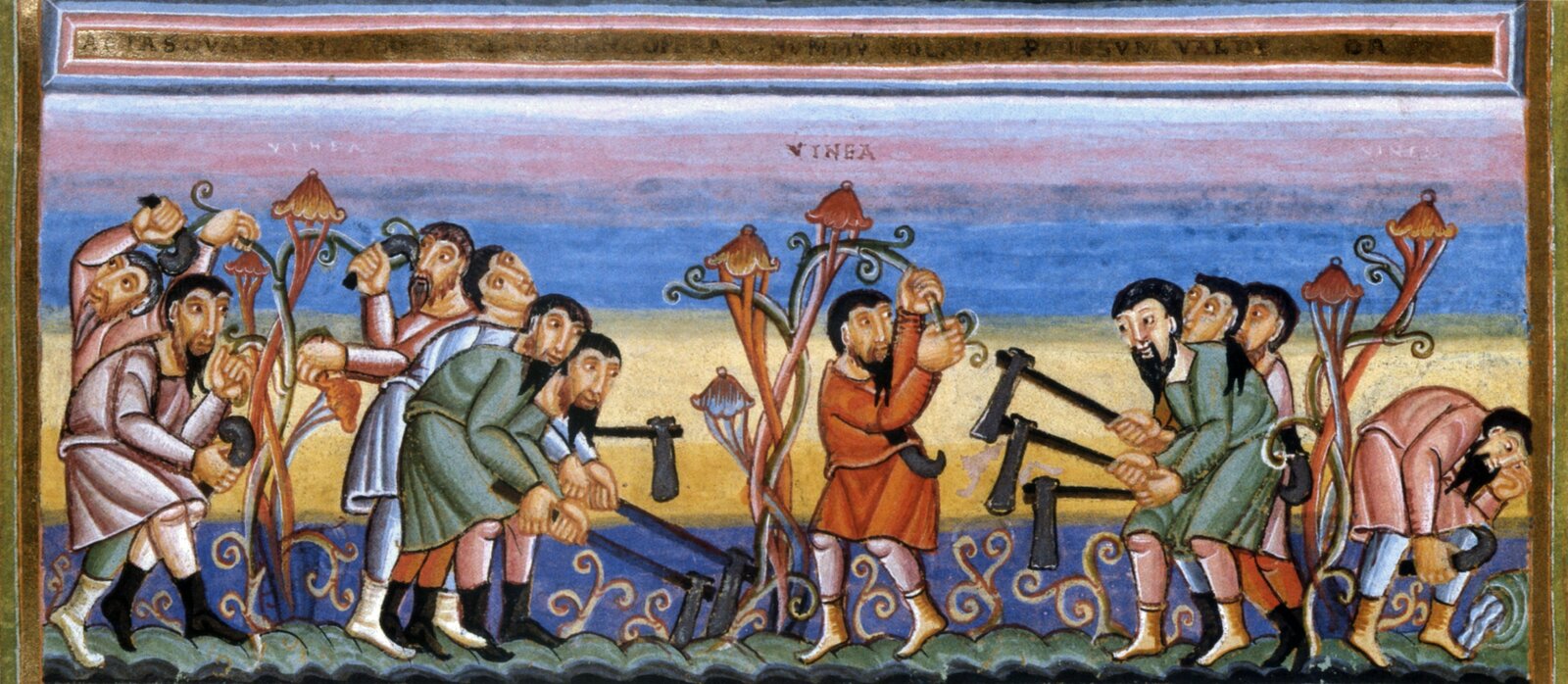
The phrase comes from a parable in the Gospel of Matthew. A landowner hires labourers for his vineyard at dawn, then at the third hour, the sixth, the ninth, and finally at the eleventh hour, an hour before the working day ends. At sunset he pays them all the same. The ones who arrived last, at the eleventh hour, got the full wage.
Much later the eleventh hour became a figure of speech for the last possible moment, and it took off in English in the 19th century. In The Virginians (1857) Thackeray wrote: “If she repented, though at the eleventh hour, it was not too late.” Dutch, Swedish, Danish and Norwegian have the same eleventh hour; Polish and German say “five to twelve” instead.
A rescue at the eleventh hour is one that comes at the very end and still counts in full. Eleven is the number of not too late.
Sources
- Matthew 20:1–16, King James Version, Bible Gateway (archived copy) — the parable itself
- Parable of the Workers in the Vineyard, Wikipedia
- eleventh hour, Wiktionary (archived copy) — the Thackeray quotation and the same phrase in other languages